

The Revolution in Diagnostic Dentistry
Saliva testing has emerged as one of the most promising developments in contemporary dental care, transforming the way practitioners identify and address oral health concerns before they escalate into serious conditions. This non-invasive diagnostic approach represents a significant departure from traditional methods, offering patients a more comfortable experience whilst providing clinicians with invaluable insights into their oral and systemic health. The science behind salivary diagnostics has advanced considerably in recent years, with research demonstrating that saliva contains biomarkers that reveal a wealth of information about a patient’s overall wellbeing.
Modern dental practices are increasingly incorporating these sophisticated testing methods into routine examinations, recognising that early detection is paramount in preventing complex dental issues. The ability to analyse saliva samples has opened new frontiers in preventive care, allowing dental professionals, such as a dentist Thames Ditton, to identify risk factors and disease markers that might otherwise remain undetected until symptoms become apparent. This proactive approach aligns perfectly with the philosophy of contemporary healthcare, which emphasises prevention over intervention.
Understanding the Science Behind Saliva Testing
Saliva serves as a remarkable diagnostic fluid, containing proteins, enzymes, antibodies, and hormones that reflect both oral and systemic health status. When patients visit their practice, dental professionals can now utilise saliva testing to detect everything from bacterial imbalances to early signs of periodontal disease. The composition of saliva changes in response to various health conditions, making it an excellent indicator of potential problems developing within the oral cavity and beyond.
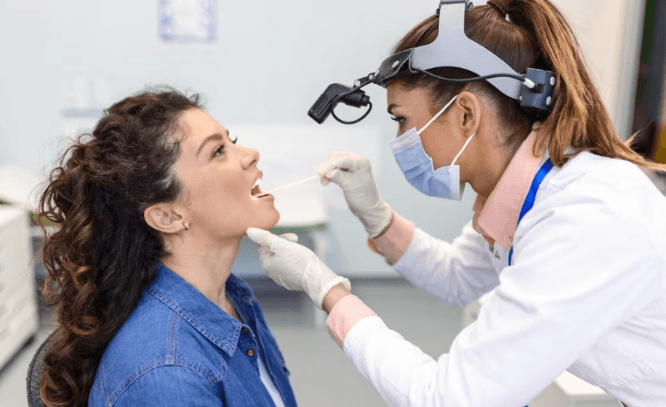
The testing process itself is remarkably straightforward and patient-friendly. Samples are typically collected using simple swabs or by having patients expectorate into sterile containers. These samples are then analysed either chairside using rapid testing kits or sent to specialised laboratories for more comprehensive evaluation. The saliva buffer capacity testing systems available today can provide results within minutes, enabling practitioners to make informed decisions during the same appointment.
Key Diseases and Conditions Detected Through Saliva Analysis
The range of conditions that can be identified through salivary diagnostics continues to expand as research progresses. Dental cavities risk assessment stands as one of the most established applications, with tests measuring bacterial levels and pH balance to determine a patient’s susceptibility to tooth decay. These assessments enable practitioners to implement targeted preventive strategies, from dietary recommendations to personalised oral hygiene protocols, long before cavities develop.
Periodontal disease detection has also benefited tremendously from saliva testing advancements. Specific inflammatory markers and bacterial species associated with gum disease can be identified through saliva samples, allowing for early intervention when treatment outcomes are most favourable. Beyond oral-specific conditions, salivary diagnostics in modern dentistry have shown promise in detecting systemic conditions, including diabetes, cardiovascular disease, and even certain cancers, as these conditions often manifest biomarkers in saliva before other symptoms appear.
The Benefits for Patients and Practitioners
The advantages of incorporating saliva testing into dental practice extend well beyond early disease detection. Patients appreciate the non-invasive nature of these tests, which eliminate the discomfort associated with more traditional diagnostic procedures. The speed of results means that treatment plans can be developed and discussed during the same visit, improving efficiency and patient satisfaction.
For dental professionals, saliva testing provides objective data that enhances clinical decision-making and enables more personalised care approaches. The comprehensive resources on salivary diagnostics available through professional dental organisations highlight the growing acceptance and integration of these techniques within mainstream practice. This evidence-based approach strengthens the patient-practitioner relationship by demonstrating a commitment to cutting-edge preventive care.
See also: Activewear Fabric Explained: How Performance Textiles Are Shaping Modern Apparel
The Future of Preventive Dental Care
As saliva testing technology continues to evolve, its role in dental practice will undoubtedly expand further. The shift towards preventive, personalised care represents a fundamental transformation in how oral health is managed. Patients seeking comprehensive dental care can now benefit from these advanced diagnostic tools, which provide early warnings and enable interventions that preserve natural dentition and promote long-term oral health. The integration of salivary diagnostics into routine dental examinations marks a significant step forward in the profession’s ability to protect and maintain patient wellbeing through scientifically-grounded, proactive healthcare strategies.