

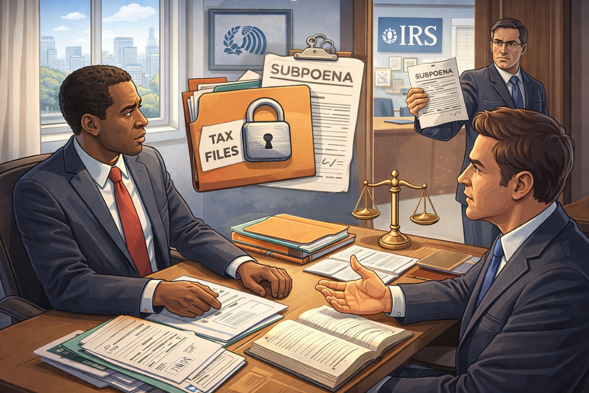
The Internal Revenue Service (IRS) has implemented sophisticated data-mining software to identify anomalies in high-value filings in the hostile climate of enforcement in 2026. When it comes to a formal subpoena or an Information Document Request (IDR), a lot of taxpayers think that their discussions with their financial advisors are confidential.
Until the One Big Beautiful Bill Act (OBBBA) came into play, though, the distinction between “confidential advice” and discoverable tax prep has been barely a hair. The knowledge of the special safeguards of the Attorney-Client Privilege is now the first line of defense against federal overreach.
Does the Attorney-Client Privilege extend to your CPA or tax preparer?
Generally, no. Although there is a limited privilege of a federally authorized tax practitioner under Section 7525 [internal revenue], it is much weaker than the one afforded by an attorney. The 2026 OBBBA framework has further limited this practitioner privilege to that which is not considered a criminal tax matter or a contentious tax shelter inquiry.
The IRS has the right to order its CPA to testify against you once you present sensitive material or acknowledge having made a mistake in filing your accounts. However, calls to a tax lawyer seeking legal counsel are not covered. There are tax attorney lawyers who can maintain the taxpayer details and value the privilege.
Can a ‘Kovel Letter’ protect your financial data?
When dealing with a complicated tax law case, an attorney may frequently require the technical skills of a CPA to offer legal advice. In order to offer the Attorney-Client Privilege to these financial professionals, lawyers use a “Kovel Letter.” This law firm is named after a historic court case where the CPA acts as an agent of the attorney. With this structure, the CPA workpapers and discussions are viewed as a continuation of the legal team.
Are your “Tax Workpapers” shielded from an IRS subpoena?
This is a popular myth. Attorney-Client Privilege only protects communications, but not the underlying documents. Should you turn over your bank statements or receipts to a tax attorney, the IRS can yet again subpoena you or the financial institution to produce the original copies of those documents.
But there is an outer layer of defense in the so-called Work Product Doctrine. It secures the materials that your lawyer drafted in advance of a lawsuit. By 2026, a tax lawyer will be able to persuade the judge that their internal analysis, risk analysis, and strategic memo are not the subject of an IRS subpoena, and the government will not have access to their defense playbook.
Does the “Crime-Fraud Exception” nullify your legal protections?
No privilege is absolute. The IRS has been more aggressive with the application of the “Crime-Fraud Exception” under the OBBBA. Where the government can establish that the legal advice has been sought to promote the commission of a crime or to commit tax fraud, the privilege is waived. There are attorneys for payroll issues who can help them with legal protections.
Under the new landscape of 2026, just being wrong on a return will not warrant this exception. It should be evidence of bad intent to mislead. A good tax lawyer makes sure that all the legal advice he gives is captured as compliance oriented that the client would not be marked as having been involved in the relationship to facilitate tax evasion.
See also: Technology and National Security
Conclusion
The attorney-client Privilege will keep being the most effective defense to an IRS subpoena in 2026, but will not be a get out of jail free card when it comes to existing records. Although your attorney may defend your strategic discussions and mental images, the IRS may still seek to extract the data. Making success in this tax session does not imply sticking with ordinary accounting and entrusting a legal firewall with the initial participation of a tax attorney.