

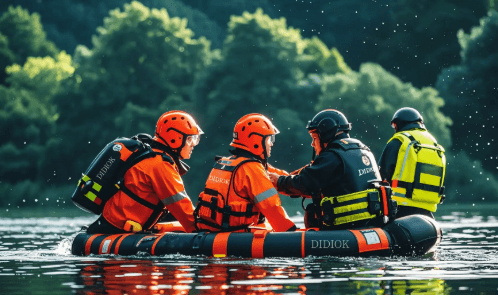
For a long time, the picture of a lifeguard—a watchful figure perched high above a bustling beach or pool—has represented security and safety. Still, under the recognizable form, a major transformation is taking place. Though the main objective stays the same, avoiding calamity and saving lives. But technological and philosophical developments are drastically altering the methods, tools, and even mindset of aquatic safety.
We are progressing beyond reactive rescue into an age of integrated, predictive, and technically assisted guardianship. This change raises important issues about the direction of human supervision in more and more complicated aquatic environments.
What Does a “Smart” Aquatic Ecosystem Actually Look Like?
Gone are the days when the human eye, moving from a stationary location, was the only instrument of surveillance. The modern underwater setting is evolving into an intelligent, interconnected network. Imagine a shore where thermal sensors are installed on poles, strategically positioned aerial drones, and fixed high-definition panoramic cameras all work together to create an all-inclusive monitoring network.
This mechanism is examining rather than just observing. This is why today’s thorough training for such environments is available through both online and in-person lifeguard certification by American Lifeguard Association programs, which now integrate operational knowledge of these technologies. Advanced software can flag erratic movements that might indicate distress or drowning, monitor crowd density, and recognize odd swimmer trajectories. For instance, someone is being towed steadily outwards by a rip current.
Under supervised settings, such as community pools, this inclusion intensifies. Underwater acoustic sensors can identify the particular sound patterns of distress, including fast, erratic splashing or silence where activity should be. AI-powered video analysis monitoring underwater body posture adds layers on top of this acoustic data. Multiple, redundant levels of detection meant to operate in symphony will help to guarantee that a failure in one system does not endanger total safety. This system transforms the whole building into a responsive entity where the surroundings help the lifeguard squad.
Can Artificial Intelligence Become a Reliable Partner in Drowning Detection?
Maybe the most controversial and revolutionary advance is Artificial Intelligence (AI) integration. AI-powered drowning detection systems mark a change from tracking activity to behavioral interpretation. Conventional vigilance demands that a lifeguard continually search for the visual indicators of drowning, which are sometimes subtle and counterintuitive: a silent, vertical struggle without any waving or shouting. Trained on large swimmer motion datasets, AI algorithms constantly evaluate real-time video feed to recognize these exact, passive drowning positions.
The main issue is one of collaboration, not replacement. For human attention, these systems act as force multipliers. A question from a visitor, a commotion on deck, or just tiredness can momentarily divert a lifeguard’s attention. But the artificial intelligence doesn’t blink. It’s ongoing, unrelenting analysis acts as a vital safety net, sending an instant alert to a central monitoring station as well as the lifeguard stand when a high-probability occurrence is discovered.
This lets human responders often intervene with never-before-heard speed, usually before other swimmers even spot a problem. Machine accuracy, therefore, complements the lifeguard’s knowledge, gut sense, and ability for sophisticated decision-making to form a symbiotic life-saving team.
How is Wearable Tech Shifting the Paradigm from Rescue to Prevention?
Wearable safety technologies make up the most personal level of this technical integration. This shifts the site of intervention even earlier, from the point of crisis to the weeks preceding it. Wide and transformational is the range of wearable safety technology.
It includes everything from simple tools like color-coded wristbands for youngsters that help lifeguards quickly identify weaker swimmers in a busy pool to sophisticated equipment like smart swim goggles. Early symptoms of exhaustion or disorientation can be alerted both the wearer and a linked monitoring station by these goggles, which may track a swimmer’s biometrics and stroke efficiency.
While giving lifeguards critical data, this technology essentially empowers people to actively participate in their own safety. It turns the model from one of purely reactive rescue after the fact to one of proactive and interactive safety network, where possible issues are discovered and addressed before they develop into full-fledged crises.
What New Skills Are Required for the 21st Century Lifeguard?
This technical change redefines and broadens the lifeguard’s responsibilities; it does not lessen them. Alongside physical skills, modern lifeguard certification now includes digital literacy. Today’s lifeguard must be able to calibrate camera angles, decode multi-source alarm data, and oversee drone missions as a systems operator. Training simulations nowadays feature situations when students have to quickly develop a response strategy based on data from an AI notification, a thermal camera stream, and eyewitness accounts.
Moreover, the emergence of extreme aquatic activities from winged foil boarding to competitive freediving calls for new, focused rescue methods. Lifeguards in certain regions may have to be taught technical water rescue using specialized equipment or how to handle traumatic injuries unique to high-impact boat accidents. Managing the continuous flow of information from technology while keeping broad situational awareness is itself a new essential skill involving mental stamina. All at once, the lifeguard transforms into a data analyst, a sympathetic first responder, and a mission controller.
Are There Ethical and Practical Limits to Technological Dependence?
With this dependency on technology come a fresh group of difficulties. There is a risk of automation complacency, where over-trust in systems could lead to a degradation of core observational skills. Comprehensive lifeguard training has therefore stressed that technology is an aid, not a substitute, for careful human judgment. Cyber security of these networked systems also presents a safety issue; a hacked or damaged surveillance system could give a false sense of security.
Moreover, the high price of sophisticated technology might result in a gap in safety regulations between well-financed facilities and public beaches or community pools on restricted budgets. As the high-tech boundary develops, the profession must struggle with making sure the foundation of lifeguard excellence—rooted in great swimming skills, proficient resuscitation methods, and watchful scanning—stays available and widespread.
See also: Trattsjuka Registry Monitoring and Health Activity Insights
How Will Organizations like the American Lifeguard Association Guide This Future?
Navigating this shift depends much on organizations setting professional standards, such as the American Lifeguard Association (ALA). Their job is to confirm novel technologies, carefully include them in certification curricula, and create the ethical and operational guidelines for their adoption. These updated standards directly inform the quality and scope of the professional lifeguard services provided by the American Lifeguard Association to facilities and communities nationwide. Ensuring that the heart of lifeguarding—the dedication to saving human life—stays primary even as trade tools grow more advanced depends on the ALA and comparable groups.
They should advocate a balanced approach whereby fundamental rescue physiology, empathetic communication, and physical fitness are taught alongside, not at the cost of, cutting-edge artificial intelligence and drones. Through the establishment of strict, flexible criteria, these organizations guarantee that the lifeguard of tomorrow is not only a technician of sophisticated devices but also a highly skilled, technologically fluent guardian ready to use every possible tool in the relentless quest for a safer world both on and beneath the water.